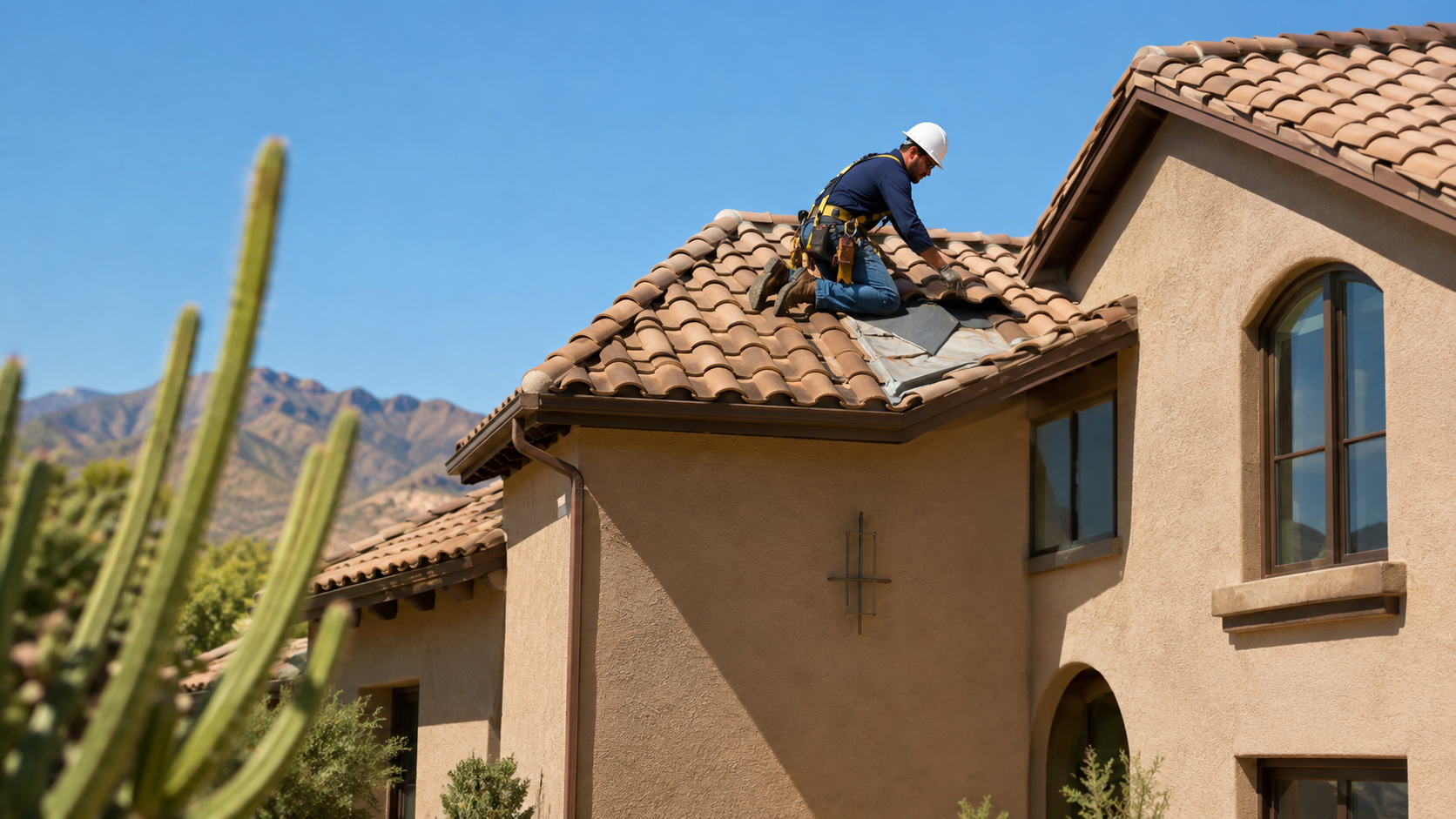
An older roof does not automatically need to be replaced before you sell an Arizona home. Buyers care about age, but they also care about present condition, leaks, maintenance, insurability, and the likely cost of future work.
The best decision usually comes from understanding the roof before the home goes on the market, then comparing the available options with your price, timing, and likely buyer.
Roof age and roof condition are different
Age provides context, but it does not answer every question. Two roofs installed in the same year may have different conditions because of workmanship, materials, exposure, storm history, maintenance, drainage, prior repairs, and the design of the home.
An older roof that has been maintained and is performing properly may present differently from a newer roof with an active leak or poor installation. Sellers should avoid making a replacement decision from age alone.
Tile roofs require more than a street-level look
Tile is common in the Phoenix metro. The visible tile is only part of the roof system. Underlayment, flashing, penetrations, valleys, fasteners, and transitions can affect performance. Broken or slipped tiles may be visible, while other concerns are not obvious from the ground.
If the roof is older or there are signs of trouble, an appropriate roofing professional can provide information that a general walk-through cannot. The Arizona Buyer Advisory encourages buyers to investigate roof condition and directs consumers to contractor resources.
Signs that deserve prompt attention
- Active leaks or recent water intrusion
- Ceiling stains or damaged drywall
- Missing, broken, or displaced roofing materials
- Deteriorated flashing or visible problems around penetrations
- Unresolved storm damage
- Repeated repairs without a clear diagnosis
- Drainage that directs water toward vulnerable areas
A seller does not need to diagnose the roof personally. The goal is to recognize when a qualified evaluation is sensible and to address active damage before it becomes a larger transaction problem.
When replacement may improve the sale
Replacement may make sense when the roof has reached the end of its practical service, has widespread failure, cannot be repaired responsibly, or creates a major insurance or financing obstacle. It may also help when the cost is known, the work can be completed before listing, and competing homes offer stronger roof condition.
A completed replacement can reduce buyer uncertainty, but sellers should not assume it adds its full cost to the sale price. Market response depends on price range, neighborhood expectations, documentation, warranty terms, and the rest of the property’s condition.
When repair may be the better choice
A targeted repair may be appropriate when a qualified roofer identifies a limited issue and the remaining system is serviceable. Repairing active leaks, broken tiles, flashing, or a specific damaged area can remove a clear concern without replacing functional components unnecessarily.
Keep the proposal, invoice, warranty, photos, and any transferable documentation. Clear records help a buyer understand what was found and what was completed.
Other options require careful negotiation
A seller may consider listing the home in its present condition, adjusting the price, offering an approved credit, or negotiating after the buyer completes inspections. Each choice has tradeoffs.
A credit does not automatically solve insurance, lender, appraisal, or safety concerns. The buyer’s financing may limit how a credit can be used. A price reduction may improve value but still leave the buyer with the immediate work. Completing a repair may protect the timeline, but it also requires cash and contractor availability before closing.
Get estimates before choosing a strategy
A vague roof concern can lead buyers to assume the worst. A professional opinion and written estimate can replace uncertainty with useful information. If more than one solution is possible, compare the scope, materials, warranty, contractor qualifications, schedule, and how each option will be documented.
Arizona homeowners can check contractor license information and complaint history through the Arizona Registrar of Contractors. Specialized work should be handled by properly qualified professionals.
Consider the roof’s interaction with solar
Solar panels can affect roof planning. Work may require panel removal and reinstallation, coordination with the solar provider, warranty review, and confirmation of who owns the equipment. Sellers should gather the solar agreement, system records, and roof documents before requesting proposals.
Replacing a roof without addressing the solar arrangement can create delays. Selling a solar-equipped home also involves separate ownership and financing questions, which are covered in the related guide to selling a house with solar panels in Arizona.
Disclosure and documentation matter
Cosmetic work should not be used to hide a known leak or material condition. Sellers should discuss disclosure obligations with their real estate professional and seek legal advice when necessary. Buyers may inspect the roof and review available records during due diligence.
Before listing, gather:
- Installation date if known
- Prior inspection and repair reports
- Invoices and warranties
- Insurance claim information
- Permit records when applicable
- Solar documents if panels are present
Make the roof decision as part of the listing plan
The roof should be evaluated alongside price, preparation, competition, and timing. A home that needs broad renovation may be marketed differently from a move-in-ready property where an unresolved roof issue is the only major concern.
Andrew can help you compare the transaction impact of repairing, replacing, pricing, or negotiating through his Seller’s Agent Services. A home valuation also provides context for how much work makes sense within the likely market range.
Talk with Andrew before committing to a major roof expense. The strongest plan is based on the property, reliable contractor information, and the way buyers are likely to evaluate the home.
Sources reviewed
This article is general real estate education, not roofing, engineering, insurance, legal, or lending advice. Obtain property-specific guidance from qualified professionals.